
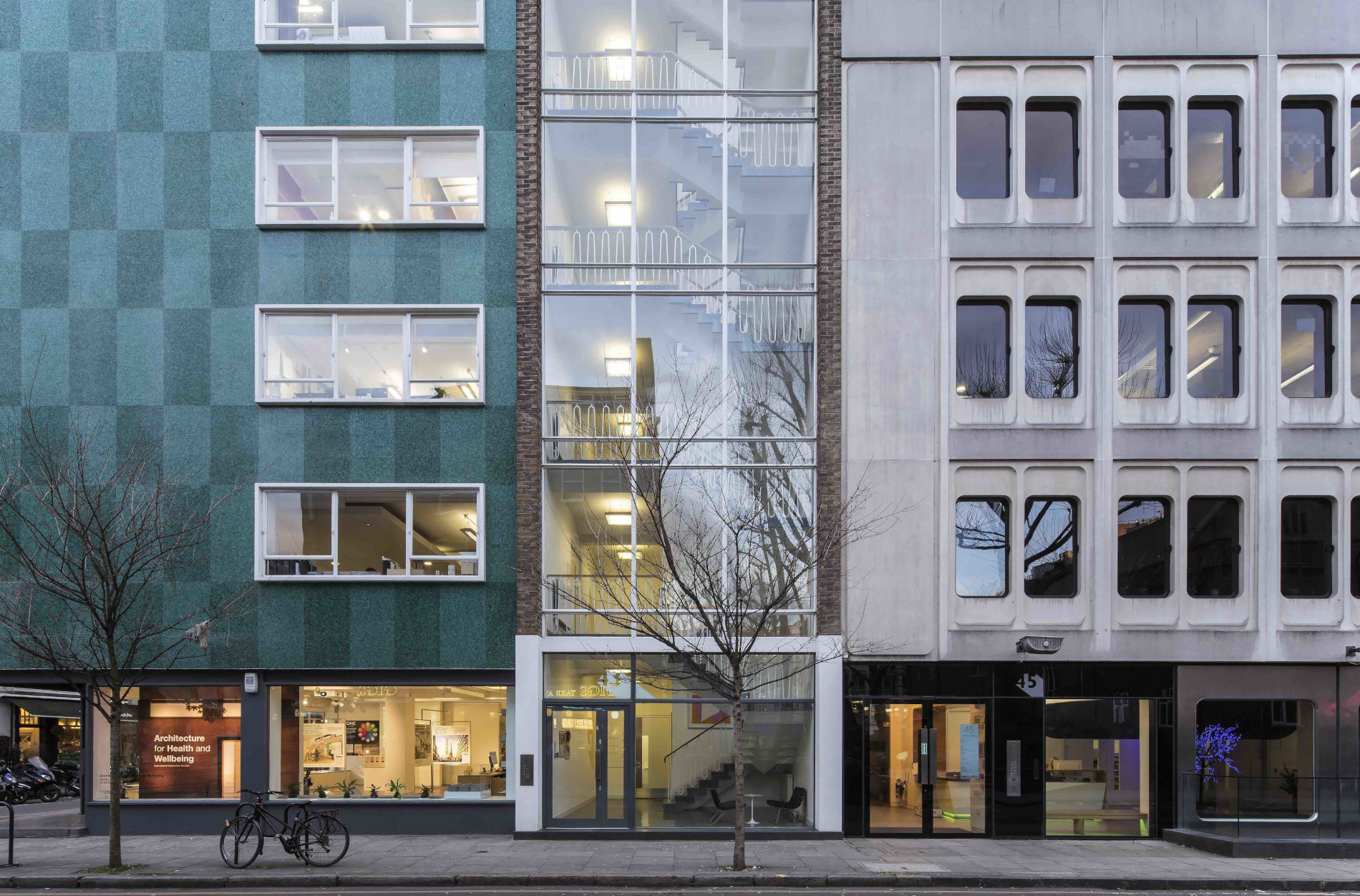
If you’re searching for managed or flexible office space in Central London, you’ve probably already typed something like:
The challenge isn’t a lack of options. It’s that Soho, Shoreditch, Oxford Circus and the City core all give you very different things in terms of vibe, cost, and the kind of buildings and fit-outs on offer.
This guide is designed as a single comparison framework you can use across those neighbourhoods, especially if you’re a scaling SME or mid-market business trying to make a 3–5 year decision in a hybrid world.
Most teams still start their office search with a building brief:
“Around 50–80 desks, some meeting rooms, breakout space, close to a Tube station.”
That’s necessary, but not sufficient. In Central London, the neighbourhood you pick will have more long-term impact than any single building:
In a flexible or managed office, many of the operational details are already bundled – utilities, internet, furniture, cleaning, communal space and often meeting room access all come in an all‑inclusive monthly price. (Source: turn1file5) So your real levers are where you locate, how much you’re prepared to pay per desk, and how much control you need over layout and branding.
Let’s define four lenses you can use to compare Soho, Shoreditch, Oxford Circus and the City core on like‑for‑like terms:
Before we get into locations, it’s worth clarifying the product set:
Most scale‑ups and SMEs end up in serviced or managed offices, because they want brandable space and predictable per‑desk costs, without building an FM team.
Real-time pricing moves constantly, but current Central London marketing for quality flexible and serviced space gives us a useful set of bands:
You don’t need to obsess over the exact £/desk at this stage. What matters is which band you’re likely to be in for each neighbourhood, and whether that matches your budget envelope.
Each neighbourhood has its own “default” building types:
Matching this to your culture is subtle but important: a 60‑person creative agency will “read” very differently in a glass tower at Bank than in a converted warehouse off Old Street.
Across Central London, the modern baseline for a good flexible or managed space now typically includes: furnished private offices, breakout areas, shared kitchens, phone booths, high‑speed Wi‑Fi, and bookable meeting rooms, plus services like reception and daily cleaning bundled into the price. (Source: turn1file5)
Where providers differentiate is in:
With this in mind, let’s apply the framework to each neighbourhood.
Vibe & neighbour mix
Soho is still shorthand for London’s creative industries: post‑production houses, media and entertainment brands, fashion, design, and a growing number of consumer tech and lifestyle companies. The streets are busy, noisy and full of food, culture and nightlife.
If your leadership team spends their time with agencies, studios, brands or investors in the West End, a Soho or Soho‑adjacent managed office is almost unbeatable for client proximity and brand signal.
Transport & accessibility
Soho sits between Oxford Circus, Tottenham Court Road and Piccadilly Circus. A number of flexible spaces around Noel Street and neighbouring roads are marketed as a 5–7 minute walk from Oxford Circus and Tottenham Court Road, giving access to the Central, Victoria and Bakerloo lines, the Northern line and the Elizabeth line via Tottenham Court Road. That checks the box for “managed office space with easy access to London Underground”.
For regional or international travel, you’re a short hop on the Elizabeth line to major rail hubs and Heathrow.
Price band
Soho usually sits at the top end of Central London’s flexible office pricing. Live examples in and around Soho show all‑inclusive per‑desk rates generally in the mid‑£500s to £800+ per month, with particularly premium design‑led or small‑suite spaces going higher. (Source: turn1file5)
For scale‑ups, the key question isn’t “Can we get Soho cheaper?” so much as “Are we getting enough business and talent value from a Soho address to justify a premium band?”
Building types & fit‑out
Expect:
Flexible and serviced providers in Soho lean heavily into community and events – think member socials, panel discussions and seasonal parties – designed to help smaller teams feel part of a wider ecosystem. (Source: turn1file5)
When Soho tends to win
Choose Soho if:
Vibe & neighbour mix
Shoreditch has evolved from fringe to mainstream over the past decade, anchored around the Old Street “Silicon Roundabout” and Shoreditch High Street. Area guides highlight a dense mix of tech companies, digital creatives, galleries and destination cafés, attracting both early‑stage startups and more established firms looking for an edgier address.
It’s less polished than the West End, but that’s often the point: Shoreditch signals experimentation, design and digital‑first thinking.
Transport & accessibility
Shoreditch is served by Old Street (Northern line and National Rail) and Shoreditch High Street (Overground), with many flexible offices advertised within a 2–5 minute walk of these stations. (Source: turn1file17)
From Old Street, you’re a brief Tube ride or cycle to both the City core (Moorgate, Bank) and the West End, making Shoreditch a strong option if your stakeholders are split.
Price band
On a headline basis, Shoreditch can look cheaper than Soho – especially if you’re comparing like‑for‑like fit‑outs slightly further from the West End. But there’s a wide spread:
Once you normalise for spec and capacity, good Shoreditch space often lands slightly below equivalent West End space, but prime Grade A or character buildings with “wow” factor can rival West End levels.
Building types & fit‑out
Shoreditch offers one of the most distinctive physical fabrics in Central London:
Some Old Street cost models show how expensive it is to take a lease and self‑fit on comparable space once you add business rates, service charge and running costs to the headline rent. Managed or serviced options side‑step that capex and embed those extras into an all‑in monthly rate.
When Shoreditch tends to win
Choose Shoreditch if:
Here we’re talking about the cluster around Oxford Circus station – including the north‑of‑Soho edges into Fitzrovia, Mayfair light, and streets like Hanover, Eastcastle and Great Titchfield.
Vibe & neighbour mix
This is where creative and corporate London collide: fashion and retail HQs, consultancies, professional services, and plenty of flexible providers targeting everything from 4‑person private offices to 20‑person suites and beyond. Listings show multiple full‑time flexible offices within a 1–5 minute walk of the station, including design‑led Grade A buildings. (Source: turn0file7)
If Soho feels too noisy but you still want a West End address, Oxford Circus and its immediate fringe are your natural short‑list.
Transport & accessibility
Oxford Circus is a major Underground interchange (Central, Victoria, Bakerloo). Combine that with walking access to Elizabeth line stations like Tottenham Court Road via Oxford Street, and you get perhaps the most connected spot in the West End for cross‑city and regional commuting.
For searches like “flexible managed office space near Oxford Circus” or “managed office space with easy access to London Underground”, this is almost the textbook location.
Price band
Pricing broadly mirrors central Soho:
The question here is less about finding bargains and more about trading off building quality vs budget within a very tight radius.
Building types & fit‑out
Expect:
When Oxford Circus tends to win
Choose this cluster if:
By “the core” here we mean the traditional City cluster around Bank, Moorgate and Liverpool Street.
Vibe & neighbour mix
This is still home turf for financial and professional services, fintech, insurance, legal and B2B firms. Flexible and managed offerings tend to present as more corporate – marble receptions, larger floorplates, and a higher proportion of suits in the lift.
Transport & accessibility
From the perspective of “managed offices close to major train stations in London”, the City core is hard to beat:
That makes the City core a strong candidate if your team comes in from across the South East, or if you’re weighing alternatives like “managed office space near Paddington with parking options” and want to compare overall commute maths.
Price band Buildings & Fit‑out
Price‑wise, prime City sits alongside prime West End. The difference tends to be in scale and style:
Choose the City core if you’re in a regulated or finance‑adjacent sector, or if rail connectivity into Moorgate/Liverpool Street matters more than West End proximity.
Here’s a shorthand way to compare the four neighbourhoods using our framework:
| Neighbourhood | Vibe & neighbours | Typical price band* | Building & streetscape | Fit‑out & flexibility | Best for |
|---|---|---|---|---|---|
| Soho | Creative, media, entertainment, consumer brands; busy street‑life | Premium (upper‑mid to high) | Period façades, refurbished interiors, dense street grid | Design‑led, lots of shared amenity; strong community feel | Creative and consumer‑facing brands; agencies; founder‑led businesses who host clients often |
| Shoreditch | Tech, product, design, digital creatives; “Silicon Roundabout” cluster | Mid to upper‑mid (wide spread) | Warehouse conversions plus newer office schemes; edgier street‑level feel | Highly customisable managed floors; character spaces; good value vs spec | Tech and digital‑first scale‑ups; teams who want character and flexibility |
| Oxford Circus / West End core | Fashion, retail, consultancies, professional services plus creative spill‑over | Premium (similar to Soho) (Source: turn0file7) | Grade A or refurbished period stock; highly central | Polished, corporate‑ready flex; strong meeting and event space | Hybrid teams needing maximum Tube access and a balanced creative / corporate signal |
| City core (Bank / Liverpool Street) | Finance, fintech, legal, B2B; more formal | Premium | Large, corporate buildings; glass and steel; big floorplates | Corporate‑grade managed & serviced options; extensive shared meeting suites | Regulated and finance‑adjacent firms; teams prioritising rail connectivity |
*Price bands are indicative for quality flexible/managed products as of 2025; individual quotes will vary by provider, building and deal structure. (Source: turn1file2)
Let’s apply this to common search intents we see.
Likely drivers
You’re a creative or consumer‑facing scale‑up (agency, production, D2C, hospitality, fashion) and want clients and partners to associate you with the West End. You’re prepared to pay premium pricing if the space is genuinely impressive.
Good neighbourhood fits
Watch‑outs
Likely drivers
You’re a product‑ or engineering‑heavy company, or a design studio that wants character and flexibility. You’re willing to be slightly east of “prime” if it means more space and a more informal feel.
Good neighbourhood fits
Watch‑outs
Likely drivers
You want maximum Tube connectivity, easy access to both Soho and Mayfair, and a setting that feels professional enough for corporate clients while retaining some creative edge.
Good neighbourhood fits
Watch‑outs
Once you’ve narrowed your search to one or two neighbourhoods, you can make the leap to specific buildings much more efficiently:
eOffice specialises in flexible, design‑led workspace and has a track record in Central London locations such as Soho and the Strand, giving you access to both West End creative energy and core transport links in a single partner network. (Source: turn1file2)
For scale‑ups and SMEs, that combination matters:
If you’re weighing Soho vs Shoreditch vs Oxford Circus vs the City core, the most effective next step is usually to shortlist neighbourhoods, then walk a handful of spaces in each on the same day. The differences in vibe, streetscape and price will be immediately obvious.
From there, a partner like eOffice can help you translate a neighbourhood‑level decision into a shortlist of specific managed offices that align with your budget, culture and growth plans.
Please enter your email address to have access to the office detail.
Please enter your email address to have access to the office detail.
Please enter your email address to have access to the office detail.
Please enter your email address to have access to the office detail.
Please enter your email address to have access to the office detail.
Please enter your email address to have access to the office detail.
Please enter your email address to have access to the office detail.
Please enter your email address to have access to the office detail.
Please enter your email address to have access to the office detail.
Please enter your email address to have access to the office detail.
Please enter your email address to have access to the office detail.
Please enter your email address to have access to the office detail.
Please enter your email address to have access to the office detail.
Please enter your email address to have access to the office detail.
Please enter your email address to have access to the office detail.
If you have any questions, require further information and would like pricing details, please get in touch.