
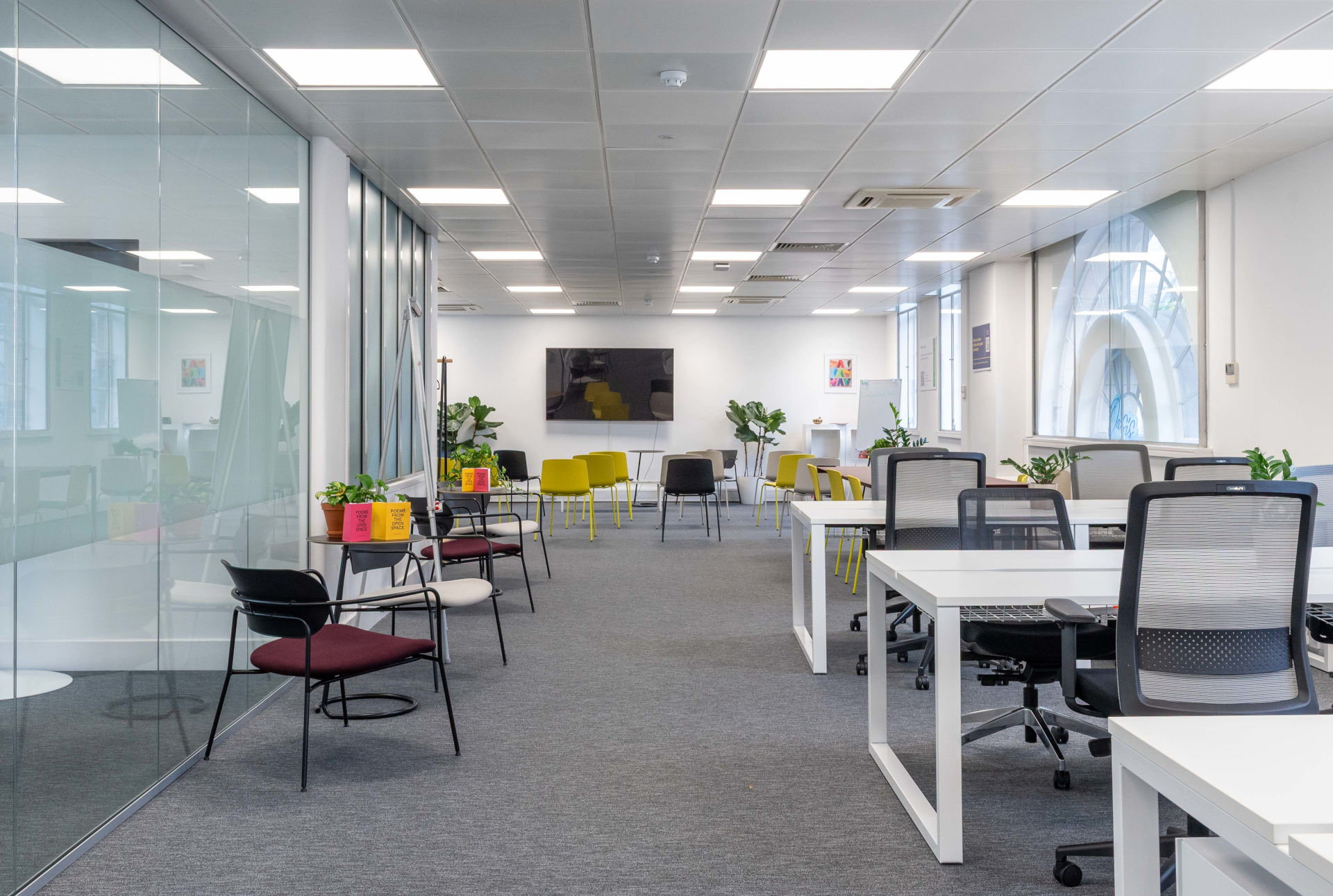
Hybrid work has changed what “having an office” needs to look like. Many teams now come together in person one to three days a week, but still want a credible Central London base for clients, investors and hires.
That’s where part‑time office space comes in: flexible office space you only pay for when you actually use it.
In this guide, we’ll break down what part‑time offices are, how pricing works in the UK (with real numbers from London), where they make the most sense, and what to look for if spotless, well‑maintained space is non‑negotiable for you and your team.
A part‑time office is any flexible office arrangement where you don’t rent a private space 24/7 on a long lease, but you still get professional space when you need it.
In practice, this usually falls into a few buckets:
Flexible workspace operators now offer all of these alongside traditional full‑time offices, especially in London. For example, eOffice’s London hubs in Holborn, Mayfair, Soho, Soho HQ, Strand and Fitzrovia offer managed offices, private offices, coworking, day passes, day offices and meeting rooms on flexible terms. (Source: eOffice – Flexible Office Solutions in London)
On top of that, eOffice specifically lists a “Private Office Part‑Time – Your Office but on the day you need” option, sitting alongside full‑time managed offices and standard private offices in its workspace menu. (Source: eOffice – About)
If you only need space in Central London for part of the week, these models let you stop paying for empty desks while keeping the professional presence and facilities you’d expect from a permanent HQ.
London remains one of the world’s most developed flexible workspace markets, with around 1,200 coworking and flex spaces in Greater London alone, out of more than 4,400 across the UK and Ireland. (Source: CoworkingCafe – Coworking Industry Report Q4 2025)
That density is great news if you want a Holborn, Soho, Mayfair or Strand address without signing a long, traditional lease. Operators like eOffice offer managed and private offices, coworking, day passes and meeting rooms from Central London buildings such as Lincoln House in Holborn and 299 Oxford Street in Mayfair, so you can access prime postcodes without taking on fit‑out costs, business rates management and multi‑year commitments. (Source: eOffice – Flexible Office Solutions in London)
Many teams have settled into a hybrid pattern where collaboration days are clustered mid‑week and focus work often happens at home. Market data shows flexible workspace is now a mainstream choice for everyone from freelancers to multinational enterprises, not a niche alternative to conventional offices. (Source: CoworkingCafe – Coworking Industry Report Q4 2025)
A part‑time office lets you:
With flexible offices, the operator typically bundles furniture, utilities, broadband and building services into a single monthly or daily rate. Providers such as Proper Office and Storey explicitly include cleaning and maintenance alongside rent, Wi‑Fi and utilities in their all‑inclusive packages, which is typical of modern serviced and flexible office offers. (Source: Proper Office – Flexible Offices in London; Storey – Flexible Offices in London)
Instead of separately managing cleaners, repairs and fit‑out, your team just turns up to a ready‑to‑use workspace in Central London, on the days you’ve booked.
What it is:
You or your team members book individual desks in a shared coworking space. You might buy a day pass, pre‑pay a bundle of credits, or join a platform that lets you drop into multiple spaces around the city.
On one pass platform, for example, the median day‑pass rate for London coworking spaces is about £32 per day, with an Explorer‑style membership starting around £29 per month for 10 hours of access. (Source: Croissant – Coworking Day Pass in London) This lines up closely with wider market data putting the median day‑pass price in Greater London at about £30. (Source: Coworking London – London Coworking Market Snapshot Q4 2025)
Good for:
Watch‑outs:
If you’re literally searching for flexible office space for part time work with clean communal areas in Soho or Holborn, hot‑desking plus well‑run shared kitchens and lounges can be a very cost‑effective starting point.
What it is:
You reserve a specific desk in a shared office area on a rolling contract. In Central London, median coworking memberships hover around £200 per month, with higher rates in premium districts and lower rates in regional cities. (Source: CoworkingCafe – Coworking Industry Report Q4 2025)
Good for:
Watch‑outs:
What it is:
A private office you rent by the day for your team – ideal for strategy sprints, quarterly planning, investor meetings or simply a focused “everyone in” day.
At eOffice, for example, you can book Day Offices in:
Those numbers are for fully furnished private rooms in Central London with high‑speed broadband included, not bare shell space. (Source: eOffice – Day Office in Central London)
Good for:
Watch‑outs:
What it is:
A dedicated office that’s “yours” on specific days, often through a flex provider that also offers full‑time offices in the same building. You’ll typically leave monitors and some equipment in place, just as you would in a normal serviced office, but you’re only paying for a subset of the week.
eOffice positions “Private Office Part‑Time” alongside its managed offices and standard private offices, highlighting it as “Your Office but on the day you need” within its London workspace solutions. (Source: eOffice – About)
Good for:
Watch‑outs:
Pricing varies widely, but a few patterns are consistent across the UK flex market.
With flex space, you’re usually paying a simple all‑inclusive rate that covers:
Serviced and flexible office operators like Proper Office explicitly bundle utilities, internet, cleaning and services into their packages, rather than passing separate service charges to occupiers, which is representative of the model you’ll see across most modern flex centres. (Source: Proper Office – Flexible Offices in London)
Putting several data points together:
Compared with a traditional Central London lease (with rent, business rates, service charges, fit‑out, cleaning and maintenance on top), many founders find that a mix of part‑time office days and remote work brings their total workspace cost down while keeping staff experience high.
Expect pricing to move based on:
When you compare options, focus on total cost per in‑office day per person, including cleaning and any extras, rather than headline desk price alone.
Even if you’re only using the office a couple of days a week, your team and clients still experience the space as a reflection of your brand.
UK workplace regulations require employers to provide a clean workplace and manage waste properly. The Workplace (Health, Safety and Welfare) Regulations 1992 state that every workplace and its furnishings must be kept “sufficiently clean”, and that floors, walls and ceilings should be capable of being kept clean, with waste not allowed to accumulate except in suitable receptacles. (Source: UK Legislation – Workplace (Health, Safety and Welfare) Regulations 1992)
The Health and Safety Executive’s guidance on workplace facilities reinforces that a healthy working environment includes good ventilation, appropriate temperatures and a clean workplace with appropriate waste containers. (Source: HSE – Have the right workplace facilities)
In short: any flexible office space for part‑time use with high hygiene standards isn’t just nice to have – it helps you meet your own obligations as an employer.
Because most serviced and flexible offices bundle services into one fee, regular professional cleaning is usually included in both private offices and shared areas:
So if you want flexible office space with regular cleaning for part time users, you shouldn’t need to hire cleaners separately but you should get clear on what’s actually included.
When you’re touring spaces or shortlisting options online, ask:
Remember, you’re not just choosing a clean desk. You’re choosing whether clients experience you as the kind of company that quietly maintains standards everywhere they look.
If you’re exploring part‑time offices in Central London, eOffice is deliberately built around flexibility:
eOffice is also a Certified B Corporation, which means it has been independently assessed against standards of social and environmental performance, governance and transparency set by B Lab. (Source: eOffice – ESG Charter; B Lab – B Corp Certification FAQs) That mindset tends to go hand‑in‑hand with thoughtful building operations — including how spaces are maintained, cleaned and made accessible — not just short‑term cost‑cutting.
If flexible office space for part time use with spotless meeting rooms and a Central London postcode is on your wishlist, that combination of flexibility and standards is worth paying attention to.
A simple way to decide:
If you’re ready to experiment without over‑committing:
Done well, a part‑time office in Central London gives you the presence of a permanent HQ, the flexibility of hybrid working, and the reassurance that your team and clients walk into a clean, well‑run environment every single time.
Please enter your email address to have access to the office detail.
Please enter your email address to have access to the office detail.
Please enter your email address to have access to the office detail.
Please enter your email address to have access to the office detail.
Please enter your email address to have access to the office detail.
Please enter your email address to have access to the office detail.
Please enter your email address to have access to the office detail.
Please enter your email address to have access to the office detail.
Please enter your email address to have access to the office detail.
Please enter your email address to have access to the office detail.
Please enter your email address to have access to the office detail.
Please enter your email address to have access to the office detail.
Please enter your email address to have access to the office detail.
Please enter your email address to have access to the office detail.
Please enter your email address to have access to the office detail.
If you have any questions, require further information and would like pricing details, please get in touch.